
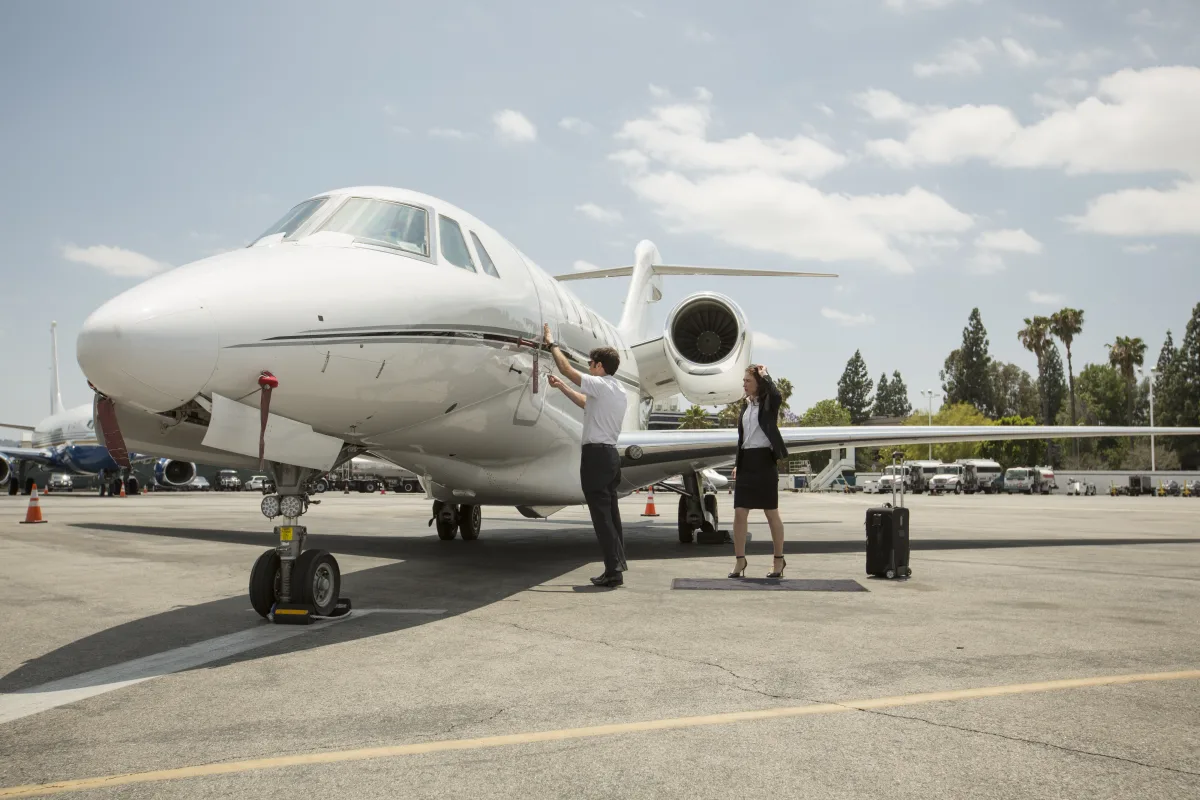
A business jet for EUR 20 million — paid in cash by a private individual or company. It happens, but it's the exception. Most buyers use external financing: leasing, bank loans, or specialized aviation finance products. Each option has its logic — and its pitfalls.
Equity — The Simplest but Rarest Option
Those who pay cash have the strongest negotiating position and the simplest ownership structure. No credit risk, no interest burden, no lender who wants a say. Disadvantage: capital is tied up and cannot be invested elsewhere. For companies, this can be unfavorable from a liquidity perspective — especially when the capital earns higher returns in the core business than the tax savings from depreciating the aircraft.
Bank Loan — The Classic Route
Specialized aviation finance banks and some universal banks finance aircraft with structured loans. Typical terms:
Typical Financing Structure (Business Jet, 2024)
- Equity portion: 20–35% of the purchase price
- Term: 7–15 years (depending on aircraft age and type)
- Interest rate: EURIBOR + 2.5–4.5% (variable) or fixed rate by negotiation
- Collateral: Aircraft mortgage, sometimes personal guarantee
- Repayment: Annuity or balloon payment (low installments + lump sum at end)
Specialized aviation banks in Europe: NORD/LB (traditionally strong in aviation finance), Norddeutsche Landesbank, plus international providers such as SMBC Aviation Capital, Air Lease Corporation (primarily commercial aviation), and specialized private banking divisions of major private banks.
Operating Lease — Use Without Ownership
With an operating lease, you rent the aircraft for a defined term (typically 3–7 years). At the end of the term, the aircraft returns to the lessor — you bear no residual value risk. This is particularly attractive in a market with uncertain value development.
Finance Lease — The Middle Ground
With a finance lease (also capital lease), you pay monthly lease installments like an operating lease — but at the end of the term, you have a purchase option at residual value (often 1–15% of the original purchase price). This combines the tax advantages of leasing with economic ownership.
What Lenders Focus On
Aviation financiers have specific requirements that residential mortgage lenders don't:
The optimal financing structure depends on your tax situation, capital market interest rates, the aircraft type, and your planned holding period. There is no universally right answer — but there are definitely wrong decisions: too little equity, too short a term with a balloon structure, no residual value buffer.
Airvalon provides contacts to specialized aviation finance experts in Germany, Austria, and Switzerland upon request — independent advisors who don't sell bank products.
