
Three acronyms, three different threats, three systems that together form the safety net of modern aviation: TCAS protects against other aircraft, TAWS and EGPWS protect against the ground. No pilot ever wants to experience these systems in action — but every pilot should understand how they work.
TCAS — Traffic Collision Avoidance System
TCAS monitors the surrounding airspace within approximately 40 nautical miles and detects other aircraft via their transponder signals. From the position data, TCAS continuously calculates whether a collision risk exists — and provides the pilot with clear evasive instructions when necessary.
TCAS Levels Compared
| System | Function | Mandatory From |
|---|---|---|
| TCAS I | Traffic Advisory (TA) — displays threat, provides directional guidance | Regional aviation |
| TCAS II v7.1 | TA + Resolution Advisory (RA) — provides clear evasive maneuvers ("Climb", "Descend") | IFR aviation EU/US from 5,700 kg MTOW |
| ACAS X (successor) | AI-based, more flexible, more precise — currently being introduced | Prospectively from ~2028 |
Critically: during a Resolution Advisory (RA), the pilot is obligated to follow the instruction immediately — even if it contradicts the ATC command. The law is unambiguous; TCAS takes precedence in this situation. ATC is informed immediately afterward.
TAWS — Terrain Awareness and Warning System
TAWS is the database-based variant of terrain monitoring — closely related to Synthetic Vision Technology. There are two certified classes:
TAWS-A is mandatory in the EU for all commercially operated turbine aircraft with more than 9 passengers. For general aviation aircraft, TAWS-B is strongly recommended but not legally required in most countries.
EGPWS — Enhanced Ground Proximity Warning System
EGPWS (Honeywell) is the brand name for the best-known TAWS-compliant system in business and commercial aviation. The "Enhanced" refers to the integrated worldwide terrain database — which was absent in the predecessor generation (GPWS), leading to dangerous false alarms and blind spots.
EGPWS provides seven defined warning modes:
EGPWS Warning Modes
- Mode 1: Excessive descent rate ("SINK RATE")
- Mode 2: Excessive terrain closure rate ("TERRAIN, TERRAIN")
- Mode 3: Altitude loss after takeoff ("DON'T SINK")
- Mode 4: Unsafe terrain clearance outside the glide path ("TOO LOW TERRAIN")
- Mode 5: Below glideslope during ILS approach ("GLIDESLOPE")
- Mode 6: Below callout altitudes ("MINIMUMS, MINIMUMS")
- Mode 7: Wind shear ("WINDSHEAR, WINDSHEAR")
System Integration
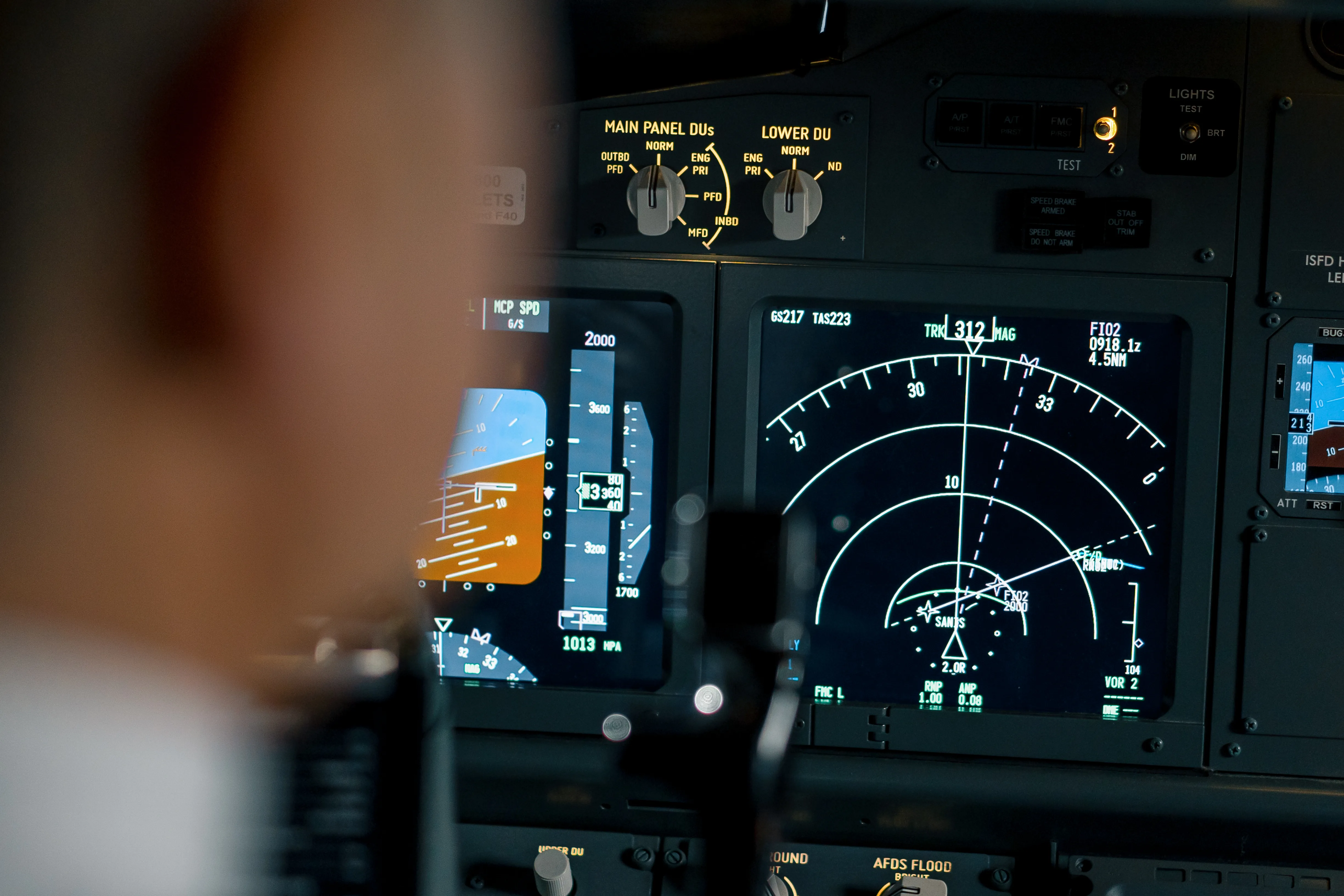
In the modern business jet cockpit, all three systems work together and are visualized on the same display: TCAS traffic on the MFD/ND, EGPWS terrain as a colored terrain overlay, SVT on the PFD as a 3D image. All three systems can alert simultaneously — with established priorities (TCAS RA has the highest priority).
TCAS, TAWS, and EGPWS are not luxury features — they are the last line of defense against the two most common fatal accident causes in controlled aviation: midair collisions and CFIT. No business jet or IFR-capable aircraft should be operated without these systems.
For buyers: every business jet on the Airvalon marketplace is checked for TCAS II v7.1, TAWS-A/B, and EGPWS compliance. Ask us about the avionics status before any viewing.
