
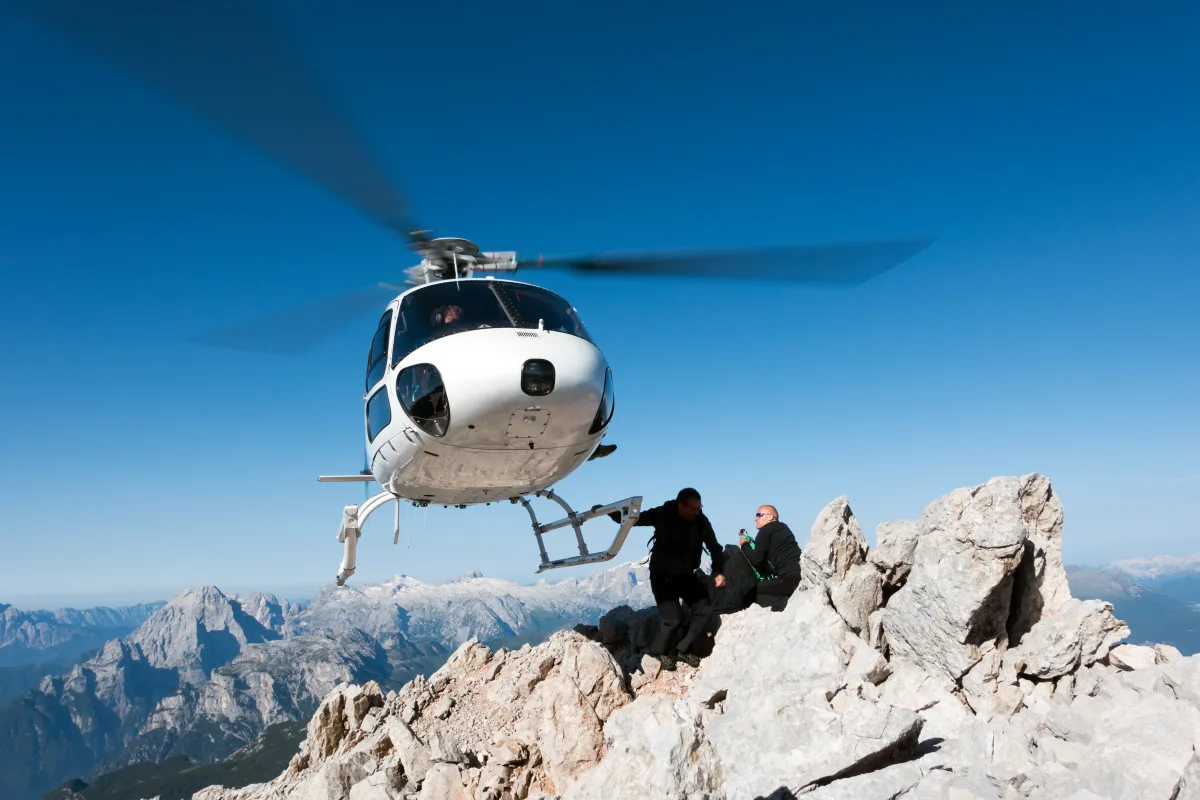
Jump operations and drop flights: Communication with skydivers, drop procedures, airspace coordination, and special requirements for jump pilots.
Skydiving from the Pilot's Perspective — What Pilots Need to Know
When the public thinks of skydiving, they picture jumpers leaping out of an aircraft. But behind every jump stands a pilot flying the drop aircraft — and that job is anything but trivial. The jump pilot is responsible for safely climbing to drop altitude, precisely positioning over the drop zone, communicating with the jumpmaster, and safely flying an aircraft whose center of gravity shifts dramatically within seconds. This article examines skydiving exclusively from the pilot's perspective.
The Role of the Jump Pilot
The jump pilot is far more than a taxi driver ferrying skydivers to altitude. The pilot is the Pilot in Command (PIC) and thus responsible for the safety of the entire flight. Key duties include:
- Flight planning: Calculating time-to-climb to drop altitude, fuel requirements, weight and balance with a full load of jumpers
- Jumpmaster coordination: Coordinating with the most experienced jumper aboard regarding drop altitude, wind conditions, spot, and exit procedures
- Spot determination: Calculating the release point accounting for wind at various altitudes so jumpers can reach the landing zone
- Flying the run-in: Precisely flying the approach to the release point on the correct heading and airspeed
- Door/ramp operation: In some aircraft types, the pilot controls the door or ramp opening
- Safe descent: After the last jumper exits, the pilot must safely and efficiently return the now significantly lighter aircraft to the airfield
Common Jump Aircraft
The choice of jump aircraft depends on the size of the drop zone operation, the number of jumpers per load, and economic considerations. Several types have become standard both in Europe and internationally.
Cessna 208B Grand Caravan
The Cessna 208B Grand Caravan is the most widely used jump aircraft in the world. With a Pratt & Whitney PT6A turboprop engine and capacity for 14 to 18 jumpers (depending on configuration), it offers the ideal balance of capacity, climb rate, and operating costs. The Caravan climbs to 13,000 ft (4,000 m) with a full load in approximately 15 to 18 minutes. Its large cargo door on the left side enables rapid deployment of even larger groups. The Caravan is the workhorse of most major drop zones worldwide.
PAC P-750 XSTOL
The New Zealand-built PAC P-750 XSTOL is another popular jump platform. With its powerful turboprop, it achieves impressive climb rates carrying up to 17 jumpers. Its STOL (Short Take-Off and Landing) capability makes it ideal for smaller drop zones with short runways. The large rear door facilitates straightforward exits.
Dornier Do 28 / Do 228
The Dornier Do 28 and its successor, the Do 228, are traditionally common jump aircraft in the German-speaking regions of Europe. The Do 28 accommodates 8 to 10 jumpers and is known for its benign handling characteristics and robust construction. The Do 228, as a turboprop successor, is more capable and is used at several European drop zones.
Pilatus PC-6 Porter / Turbo Porter
The Swiss-built Pilatus PC-6 Turbo Porter is a legendary jump aircraft. With exceptional STOL performance and a large side door, it carries 6 to 10 jumpers. The Turbo Porter is particularly popular in Alpine regions, where it also serves as a glacier aircraft and utility transport. Its rugged construction and reliable PT6 turbine make it a true workhorse among jump aircraft.
| Aircraft Type | Jumpers | Time to Climb to 13,000 ft | Powerplant |
|---|---|---|---|
| Cessna 208B Grand Caravan | 14-18 | 15-18 min | PT6A Turboprop |
| PAC P-750 XSTOL | 15-17 | 12-15 min | PT6A Turboprop |
| Dornier Do 28 | 8-10 | 20-25 min | 2x Piston |
| Pilatus PC-6 Turbo Porter | 6-10 | 12-16 min | PT6A Turboprop |
The Jump Flight — Sequence from the Pilot's Perspective
A typical jump flight follows a standardized sequence divided into several phases.
Phase 1: Preparation and Loading
Before takeoff, the pilot calculates the weight and balance. This is particularly critical for jump flights, as the jumpers sit in the cabin and then move toward the door before exiting — which shifts the center of gravity. With a full load, the CG is often near the aft limit. The pilot must ensure the aircraft remains within approved CG limits during every phase of flight.
Jumpers are loaded by weight and jump group (formation, tandem, AFF, solo). The jumpmaster takes their position near the door.
Phase 2: Takeoff and Climb
Takeoff occurs at maximum payload. The aircraft is heavy, and the takeoff roll is correspondingly longer than in normal operations. The climb to the standard drop altitude of 13,000 ft (4,000 m) — or 15,000 ft (4,500 m) for special jumps — is typically flown in a tight pattern over or near the drop zone, ensuring the airfield remains within gliding distance in case of engine failure.
During the climb, the pilot monitors engine parameters, scans airspace, and maintains radio contact with the ground station. At drop zones within controlled airspace, ATC clearance is required.
Phase 3: Run-In and Spot
Approximately 3,000 to 6,000 ft before the planned release point, the run-in begins. The pilot flies a straight course over the drop zone, reduces speed to the exit airspeed (typically 80-90 KIAS for a Caravan), and signals the jumpmaster that the drop run has commenced.
The spot — the optimal release point — is calculated accounting for wind at various altitude layers. A jumper in freefall at approximately 120 mph (200 km/h) terminal velocity is exposed to wind at every altitude. The release point is therefore offset upwind from the landing zone. In strong upper-level winds, the offset can be several miles. The jumpmaster and pilot coordinate the spot together — the jumpmaster looks out the door and visually assesses position, while the pilot navigates by GPS and ground references.
Phase 4: Cut — the Drop
The signal to begin the drop is called "Cut." The jumpmaster calls "Cut!" or gives a tap signal, and the jumpers begin exiting the aircraft. The pilot maintains:
- Constant airspeed: The exit speed must be held — too fast risks injury to jumpers in the airstream; too slow risks a stall
- Constant altitude: The aircraft must not climb or descend during the drop
- Constant heading: Course deviations alter the spot and may prevent jumpers from reaching the landing zone
When multiple groups are aboard (e.g., a 4-way formation, then tandems, then solos), the drop is conducted in intervals. Several seconds pass between groups as the pilot continues flying to ensure adequate ground separation.
Phase 5: Descent After the Drop
After the last jumper exits, the pilot is alone in a now significantly lighter aircraft. The weight difference in a Caravan with 16 jumpers can exceed 3,300 lb (1,500 kg). The aircraft handles completely differently than during the climb — it is light, agile, and tends to climb at unchanged power settings.
The descent is typically performed as a steep descent at reduced power to return to the field quickly and pick up the next load. Typical descent rates are 1,500 to 2,500 ft/min, with engine temperatures (ITT on turboprops) carefully monitored — rapid power reductions can cause thermal shock to the engine.
"The descent after the drop is one of the most critical moments. The aircraft suddenly has a completely different weight, the trim is off, and if you're not paying attention, you'll be at VNE or in a stall within seconds, depending on what you get wrong."
Center of Gravity Shift — the Underestimated Risk
The CG shift during jumper exit is one of the greatest risks for jump pilots. When 10 to 16 people who were previously distributed throughout the cabin move toward the rear door and exit one after another, the center of gravity shifts dynamically:
- Before the drop: CG shifts aft as jumpers move toward the door
- During the drop: With each jumper exiting, the CG shifts forward
- After the last jumper: CG is far forward (only the pilot and empty cabin remain)
The pilot must continuously compensate for these CG changes with elevator trim. In extreme cases — such as when all jumpers are standing at the tail simultaneously — the CG can exceed the aft limit, leading to an uncontrollable nose-up tendency. Experienced jump pilots therefore actively manage how jumpers move within the cabin.
Airspace Coordination and NOTAMs
Parachute operations require extensive airspace coordination. Jump activity is made visible to other airspace users through several mechanisms.
NOTAMs (Notices to Air Missions)
For every parachute operation, a NOTAM is issued to inform other pilots about the active drop zone. The NOTAM specifies the geographic position of the drop zone, activation times, maximum drop altitude, and the radius of the zone. Pilots transiting the area must either circumnavigate the drop zone with adequate clearance or confirm that no active jump operations are in progress. In the US, parachute jump operations are governed by 14 CFR 105, which requires NOTAMs and imposes specific requirements on both the PIC and the jump operation.
Mandatory Radio Calls
The jump pilot makes the following radio transmissions:
- Before the drop: "Jumpers away in [position], altitude [FL/altitude], [number] jumpers"
- After the drop: "Jumpers are out, [position], beginning descent"
- On ATC/FIS frequency: Reports to the responsible flight information service
In controlled airspace (Class C or D), the pilot must obtain ATC clearance for the drop and confirm the timing. ATC then separates other traffic from the drop zone.
Jump Types and Their Implications for the Pilot
The various jump types have direct implications for the jump pilot's workload:
Tandem Jump
In a tandem jump, a passenger is attached to an experienced tandem master. Tandems are heavy (two people plus equipment, approximately 400-440 lb / 180-200 kg per tandem) and exit the aircraft individually at larger intervals. For the pilot, this means a longer drop run and greater CG shifts per exit.
Solo Jump
Licensed solo jumpers exit the aircraft quickly and straightforwardly. The drop run is short, and CG shifts are moderate. Solo jumpers typically exit after formation jumpers to ensure adequate group separation.
AFF (Accelerated Freefall)
During AFF training, a student jumps simultaneously with two instructors. The trio is heavy and requires a precise drop position. AFF jumpers are typically the first group to exit, as they have the longest freefall time and require the greatest spotting accuracy.
Formation Skydiving
Large formations (4-way, 8-way, 16-way, or larger) require extremely precise spotting. The entire group exits the aircraft nearly simultaneously, causing a rapid and massive CG shift. The pilot must be prepared for the aircraft to lose several hundred pounds of weight within 2-3 seconds.
Hazards for the Pilot
Jump flying involves specific risks that go beyond normal flight operations:
- Engine failure during climb: With a full jumper load at low altitude, an engine failure is particularly critical. Glide performance is significantly reduced due to the high weight. The pilot must identify a suitable emergency landing site within the short glide range.
- Door problems: If the door fails to open correctly or opens uncontrollably in flight, this can massively affect the aircraft's aerodynamics and cause controllability issues.
- Jumper stuck in the door: If a jumper becomes trapped in the doorway and cannot exit, the pilot must abort the pass and land with the jumper in the door — a highly critical situation.
- Fatigue: On busy days, a jump pilot flies 8 to 12 loads. That means 8 to 12 takeoffs, climbs to 13,000 ft, and landings — per day. The fatigue is real and represents a significant safety risk.
- Collision hazard: During descent, the pilot must avoid jumpers under canopy who are descending through the same airspace. A collision between the aircraft and a canopy would be catastrophic.
Qualifications as a Jump Pilot
There is no specific separate license for jump pilots. However, certain requirements apply:
- Valid pilot license: At least PPL(A) for non-commercial operations; CPL(A) for commercial drop zone operations (FAA equivalent: Commercial Pilot Certificate required for compensation or hire)
- Type rating: For the specific jump aircraft (e.g., the Cessna 208 requires a turboprop endorsement)
- Endorsement/briefing: Specific orientation on the jump procedures of the particular drop zone
- Experience: Many drop zones require at least 200 to 500 hours total flight time
For many young pilots, jump flying is a popular entry point into a professional aviation career. The pay is modest, but flight hours accumulate rapidly — a jump pilot can log 15 to 20 flight hours in a single weekend, a rate virtually unmatched by any other flying activity.
Special Procedures
Night and Special Jumps
Night jumps require special permissions and an illuminated landing zone. The pilot must be capable of instrument flight and must identify the drop zone using GPS and lighted references. Special jumps such as HALO (High Altitude Low Opening, from 25,000 ft / 7,000 m and above) require supplemental oxygen for both pilot and jumpers, along with a pressurized cabin or oxygen masks.
Emergency: Jumper Unable to Exit
If a jumper refuses to jump (fear, medical issue), the pilot must land with the jumper aboard. This alters the weight and balance calculation for landing and, in the case of tandems, may mean the tandem master and passenger — approximately 440 lb (200 kg) of additional weight — remain on board.
"Most people watch the jumpers when they think of skydiving. But without the pilot making dozens of critical decisions on every flight, there would not be a single jump."
Summary
Jump flying is a distinct discipline within aviation that demands the highest levels of attention and specialized skills. The jump pilot must manage dynamic CG shifts, fly precise release points, coordinate with jumpmasters, and operate the aircraft in a regime far beyond normal VFR flight. Airspace coordination through NOTAMs and mandatory radio calls ensures that jump operations are safely integrated into the wider air traffic system. For young pilots, jump flying offers a unique opportunity to build flight time rapidly — but the specific risks of these operations must never be underestimated.
