
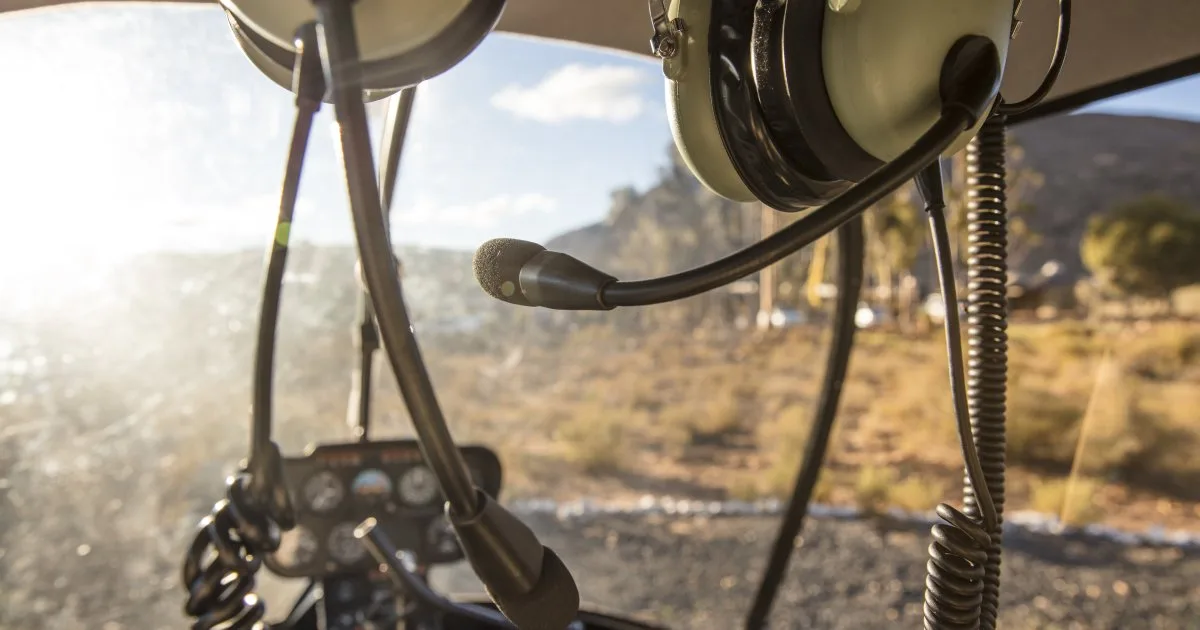
Helicopter private pilot license: Minimum flight hours, costs between $35,000 and $60,000, exam procedures, and why the Robinson R22 is the standard trainer.
The Road to the PPL(H) -- Training, Costs, and What to Expect
The dream of flying helicopters begins with a license: the PPL(H) -- the Private Pilot License for Helicopters. Under EASA regulations, it is the entry-level license for anyone who wants to fly rotorcraft, whether as a hobby, as preparation for a professional career, or for business purposes. In the United States, the FAA equivalent is the Private Pilot Certificate -- Helicopter, governed by 14 CFR Part 61. The path to either license is more demanding, more time-consuming, and significantly more expensive than its fixed-wing counterpart, the PPL(A). This article explains all the requirements, realistic costs, and tips for completing the training efficiently and successfully.
Regulatory Framework -- EASA Part-FCL and FAA Part 61
In Europe, the PPL(H) is issued under the provisions of EASA Part-FCL (Flight Crew Licensing). These regulations apply uniformly across all EASA member states -- a PPL(H) earned in Germany is valid throughout Europe. The relevant provisions are found in Commission Regulation (EU) No. 1178/2011, specifically sections FCL.200 through FCL.235.
In the United States, the FAA Private Pilot Certificate -- Helicopter is governed by 14 CFR Part 61. While the structure differs from EASA, the core requirements are comparable. FAA certificates are valid worldwide for U.S.-registered aircraft and can be converted to EASA licenses through a validation process.
Both licenses authorize the holder to fly helicopters of the endorsed type(s) without compensation under visual flight rules (VFR). Passengers may be carried, but the pilot may not conduct commercial flights. For commercial operations, a CPL(H) (EASA) or Commercial Pilot Certificate -- Helicopter (FAA) is required.
Prerequisites -- What You Need Before You Start
Before training can begin, the following prerequisites must be met:
- Minimum Age: 17 years for license issuance (training may begin at 16). The FAA similarly requires 17 years for a private pilot certificate, with solo flight permitted at 16.
- Medical Certificate: A valid Class 2 Medical Certificate issued by an Aviation Medical Examiner (AME). The examination includes: vision test (near and far acuity, color vision), hearing test, EKG, pulmonary function, blood and urine analysis, and a general physical examination. Cost: approximately $120 to $300. Under EASA, the medical is valid for 60 months for pilots under 40 and 24 months for those over 40. FAA validity periods are 60 months (under 40) and 24 months (40 and over).
- Background Check: Required in certain jurisdictions. In the U.S., TSA screening applies to non-U.S. citizens under the Alien Flight Student Program (AFSP). Cost varies by jurisdiction.
- Language Proficiency: Proof of English proficiency at minimum ICAO Level 4 for radiotelephony. Native English speakers generally satisfy this requirement automatically.
- Radiotelephone License: Requirements vary by country. In the U.S., no separate radio license is required for domestic operations, though an FCC Restricted Radiotelephone Operator Permit is needed for international flights.
Ground School -- Nine Subjects, One Goal
The theoretical training for the PPL(H) covers a minimum of 100 hours of instruction under EASA and encompasses the same nine subject areas as the PPL(A). The FAA does not prescribe a specific hour count but requires passing the FAA Private Pilot Knowledge Test. The EASA examination is a multiple-choice test administered by the national aviation authority:
| Subject | Content | Questions (EASA) |
|---|---|---|
| Air Law | ICAO rules, national regulations, airspace structure | 40 |
| Human Performance | Physiology, stress, aeronautical decision making | 24 |
| Meteorology | Weather, clouds, METARs, TAFs | 40 |
| Communications | Radio procedures, standard phraseology | 20 |
| Principles of Flight | Rotorcraft aerodynamics, rotor physics | 40 |
| Operational Procedures | Emergency procedures, operating limitations | 20 |
| Flight Performance & Planning | Weight & balance, performance charts | 32 |
| Aircraft General Knowledge | Engines, hydraulics, electrics, instruments | 52 |
| Navigation | Course calculations, GPS, chart work | 48 |
Under EASA, the pass mark is 75 percent per subject, with a maximum of four attempts within 18 months. The FAA knowledge test requires a score of 70 percent. A key difference from the PPL(A): the "Principles of Flight" subject in the PPL(H) covers helicopter-specific aerodynamics -- rotor physics, autorotation, ground effect, and the unique flight regimes of rotorcraft.
Many flight schools offer the theory component as a distance-learning course with in-person seminars. Costs for the ground school portion typically range from $1,800 to $4,000, depending on the school and format. Holders of an existing PPL(A) may receive credit for certain subjects and need only study the helicopter-specific material in depth.
Flight Training -- 45 Hours Minimum (EASA) / 40 Hours (FAA)
The practical flight training under EASA Part-FCL requires a minimum of 45 flight hours, broken down as follows:
- 25 hours dual instruction (training flights with a certified flight instructor)
- 10 hours solo (alone on board, under instructor supervision)
- 5 hours solo cross-country, including at least one flight of 100 NM (185 km) with landings at two different airfields
- The remaining 10 hours may be flown dual or solo
Under FAA Part 61, the minimum is 40 hours, with at least 20 hours of dual and 10 hours of solo (including 3 hours of solo cross-country). In practice, most students require significantly more than the regulatory minimum. 50 to 65 hours is realistic; some students need 70 or more. The training follows a structured progression:
Phase 1 -- Basic Exercises (approx. 10-15 hours): Straight-and-level flight, climbs, descents, turns, hovering (the most difficult exercise -- see our dedicated article). The student learns to coordinate all four control inputs simultaneously. Many students need 5 to 10 hours just to achieve a stable hover.
Phase 2 -- Traffic Pattern and Landings (approx. 5-10 hours): Takeoffs and landings, traffic patterns, crosswind landings, various approach profiles (steep approaches, shallow approaches). The student also practices quick stops (rapid deceleration from forward flight to a hover) and running landings.
Phase 3 -- Emergency Procedures (approx. 5-8 hours): Autorotation (power recovery and full-down), tail rotor failure simulation, engine failure in the hover, forced landings to unprepared sites. Autorotation is a mandatory maneuver that must be demonstrated during the checkride.
Phase 4 -- Navigation (approx. 5-10 hours): Cross-country flights using charts and GPS, radio navigation, approaches to various airfields, alternate airports, flight planning.
Phase 5 -- Solo Phase (10 hours): The student flies alone -- first in the traffic pattern, then on short cross-country flights, and finally on the long solo cross-country of at least 100 NM.
Training Helicopters -- R22, R44, and Cabri G2
The choice of training helicopter significantly affects both costs and the learning experience. Three types dominate internationally:
Robinson R22 Beta II: The world's most widely used training helicopter. Two-seat, piston engine (Lycoming O-360, 145 HP), 2-blade rotor with a teetering rotor head. The R22 is the most affordable path to the PPL(H), but also the most demanding: its light weight, 2-blade rotor with pronounced vibration, and sensitive controls make it the "sports car" among training helicopters. The FAA mandates SFAR 73 Awareness Training for the R22 -- a special briefing on this type's unique handling characteristics. Hourly rate: $450 to $650.
Robinson R44 Raven II: Four-seat, piston engine (Lycoming IO-540, 260 HP), 2-blade rotor. More forgiving than the R22, with more cabin space and payload, but considerably more expensive to operate. Less commonly used as a primary trainer but excellent for advanced training and cross-country flights. Hourly rate: $700 to $950.
Guimbal Cabri G2: This French newcomer has established itself as a serious alternative to the R22 since its certification in 2007. Two-seat, piston engine (Lycoming O-360, 145 HP), but with a 3-blade rotor, Fenestron (shrouded tail rotor), and a crash-resistant airframe. The Cabri G2 is considered safer and more comfortable than the R22: the 3-blade rotor produces less vibration, the Fenestron reduces ground-level accident risk, and the controls are less twitchy. Hourly rate: $520 to $700.
| Criterion | R22 Beta II | Cabri G2 | R44 Raven II |
|---|---|---|---|
| Seats | 2 | 2 | 4 |
| Engine | Lycoming O-360 (145 HP) | Lycoming O-360 (145 HP) | Lycoming IO-540 (260 HP) |
| Main Rotor Blades | 2 | 3 | 2 |
| Tail Rotor | Open | Fenestron | Open |
| Hourly Rate (wet) | $450-$650 | $520-$700 | $700-$950 |
| Vne | 102 kt | 100 kt | 117 kt |
| Crashworthiness | Basic | Enhanced safety cell | Basic |
Costs -- A Realistic Breakdown
The cost of a PPL(H) is frequently underestimated. Here is a detailed breakdown based on current rates (2025/2026):
| Item | Minimum | Realistic | Comfortable |
|---|---|---|---|
| Flight hours (45-65h on R22) | $20,000 | $30,000 | $38,000 |
| Instructor fees | (included in hourly rate) | (included in hourly rate) | (included in hourly rate) |
| Ground school (distance + seminars) | $1,800 | $2,800 | $4,000 |
| Class 2 Medical | $120 | $220 | $300 |
| Background check / TSA | $50 | $100 | $130 |
| Radio license (if applicable) | $220 | $400 | $580 |
| Checkride / exam fees (written + practical) | $600 | $850 | $1,200 |
| Study materials, headset, charts | $350 | $700 | $1,200 |
| Landing fees, miscellaneous | $220 | $580 | $950 |
| Total Cost | $23,360 | $35,650 | $46,360 |
Training on the Cabri G2 brings total costs to approximately $40,000 to $52,000. A full course on the R44 can easily exceed $58,000. For comparison, a PPL(A) typically costs $12,000 to $18,000 -- the helicopter rating is roughly three times as expensive.
The Practical Test -- Checkride / Skill Test
The practical test (EASA: Skill Test; FAA: Checkride) is administered by a Designated Pilot Examiner (DPE) or authorized Flight Examiner (FE) and lasts approximately 60 to 90 minutes of flight time plus an oral examination/ground briefing. The test flight includes the following elements:
- Pre-Flight Inspection: Preflight check, weight and balance calculation, flight planning
- Takeoff and Climb: Normal takeoff, maximum performance takeoff from a confined area
- Traffic Pattern: Standard procedures, spacing, altitudes
- Hovering: Stationary hover, hover taxi, spot turns (pedal turns about the vertical axis)
- Cross-Country: Navigation, course tracking, altitude control
- Emergency Procedures: Autorotation (power recovery), simulated engine failure, tail rotor malfunction
- Special Maneuvers: Quick stop, steep approach, confined area operations
- Landings: Normal, crosswind, confined landing areas
The pass rate on the PPL(H) checkride is approximately 75 to 85 percent -- lower than the PPL(A), reflecting the higher complexity. A failed checkride may be retaken after additional training.
PPL(A) vs. PPL(H) -- Costs and Effort Compared
| Criterion | PPL(A) / Private Pilot - Airplane | PPL(H) / Private Pilot - Helicopter |
|---|---|---|
| Minimum flight hours | 45 hours (EASA) / 40 hours (FAA) | 45 hours (EASA) / 40 hours (FAA) |
| Realistic hours | 55-70 hours | 50-65 hours |
| Cost per flight hour | $200-$300 | $450-$700 |
| Total cost (realistic) | $12,000-$18,000 | $35,000-$52,000 |
| Difficulty | Moderate | High |
| Ground school | 9 subjects (identical) | 9 subjects (helicopter-specific) |
| Ongoing costs (hourly rental) | $180-$250/h | $400-$600/h |
After the PPL(H) -- Further Ratings and Qualifications
The PPL(H) is just the beginning. The following endorsements and qualifications can be added:
Type Ratings: The PPL(H) is initially endorsed for the training type (e.g., "R22"). Each additional helicopter type requires a separate type rating with theoretical and practical examination. Costs typically run $3,500 to $9,500 for piston helicopters and $17,000 to $35,000 for turbine helicopters.
Night Rating (EASA) / Night Flying Privileges (FAA): A minimum of 5 hours of night flight with an instructor, including 3 hours dual and 1 hour solo. Cost: approximately $3,500 to $5,800. Night flight in helicopters is particularly demanding, as ground reference points are harder to identify. Note: Under FAA rules, night flying is included in the private pilot training curriculum.
Instrument Rating -- IR(H): Authorizes flight under instrument flight rules. Requires at least 50 hours of IFR flight experience and a type rating on an IFR-approved helicopter. Cost: $35,000 to $58,000. Only a limited number of helicopters in private use are IFR-certified.
CPL(H) -- Commercial Pilot License / Certificate: The commercial license requires a minimum of 155 hours total flight experience (EASA) or 150 hours (FAA), with at least 35 hours on the test type, and authorizes commercial operations. The training encompasses an additional 30 to 40 hours of advanced instruction plus an extended written examination (ATPL(H) theory under EASA). Total cost from PPL(H) to CPL(H): $46,000 to $95,000.
ATPL(H) -- Airline Transport Pilot License / Certificate: The highest pilot license for helicopter pilots. Requires at least 1,000 hours as pilot-in-command and authorizes the holder to serve as captain on all helicopter types. A prerequisite for positions with HEMS operators, offshore companies, and law enforcement aviation units.
Tips for Efficient Training
- Consistency is key: A minimum of two flight lessons per week maintains learning momentum. Longer gaps lead to regression and additional costs.
- Ground school first: Complete the theory before starting practical training. A student who understands the aerodynamics will learn to fly faster.
- Plan for weather delays: Budget for 20 to 30 percent weather-related cancellations. A realistic timeline for completing the training is 6 to 12 months.
- Secure financing upfront: Ensure funding is available for at least 60 flight hours before you begin. An interruption for financial reasons is the most expensive mistake you can make.
- Choose your flight school carefully: Look for proper certification (ATO under EASA, FAA Part 141 or Part 61 school), instructor experience, aircraft condition, and scheduling availability.
"The PPL(H) is more than a certificate -- it is the gateway to an entirely different kind of flying. Once you have hovered, you will never want to just fly straight and level again."
The road to the PPL(H) is long, demanding, and expensive. But it leads to a skill that only a few thousand people worldwide possess: the ability to control an aircraft that can take off vertically, hold its position in the air, and land in any terrain. For many graduates, the moment of their first solo hover marks the beginning of a lifelong passion.
