
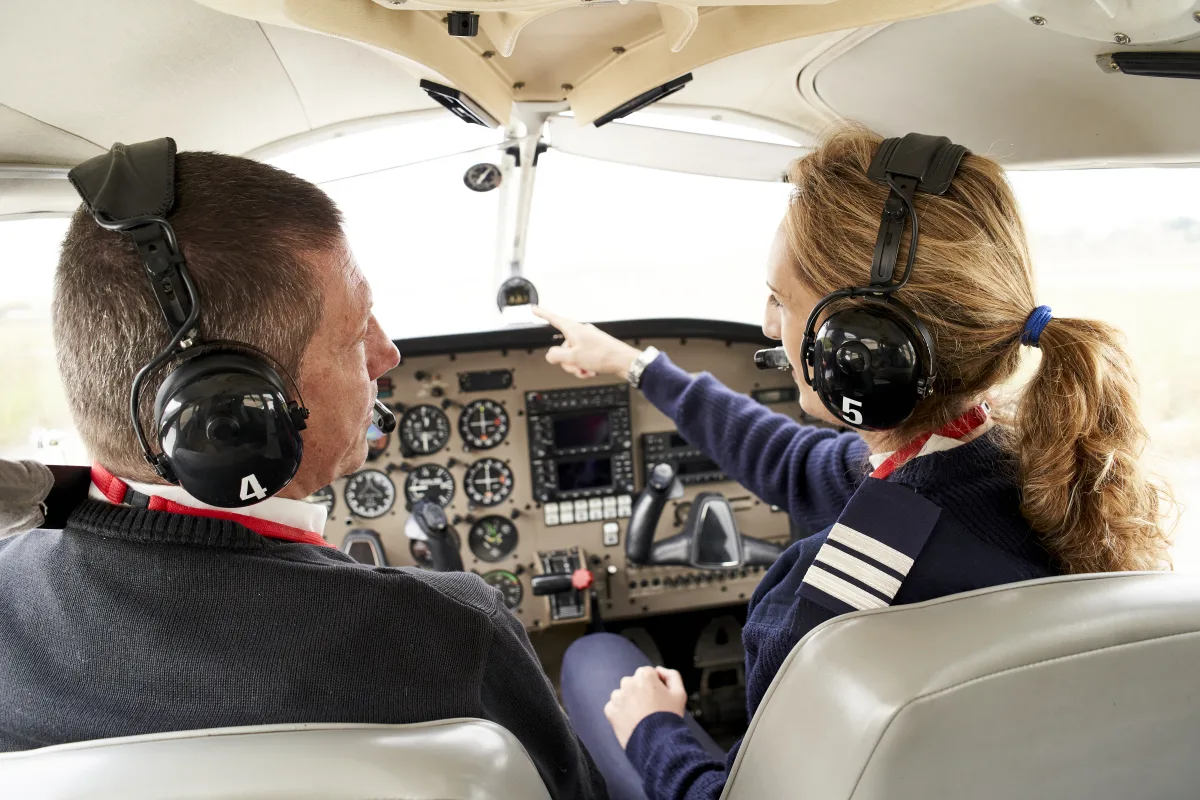
Glider pilot training: Process, costs, time commitment, exams, and why soaring is the most affordable entry into aviation.
The Path to a Glider Pilot License — Training Explained Realistically
Gliding is one of the most accessible forms of pilot training. In many countries, you can solo as young as 14 and earn your license at 16 — well before you can get a driver's license. But how does the training actually work? What does it really cost? And what license options are available? This article describes the realistic path to a glider pilot license, from the first dual-seat lesson to independent cross-country soaring.
FAA Private Pilot - Glider Certificate
In the United States, the FAA (Federal Aviation Administration) issues glider pilot certificates under 14 CFR Part 61. The Private Pilot - Glider certificate authorizes the holder to fly gliders (sailplanes) and is recognized throughout the US. In Europe, the equivalent is the SPL (Sailplane Pilot Licence) issued under EASA Part-FCL, which is valid across all EASA member states.
The Private Pilot - Glider certificate allows the holder to act as pilot in command of gliders. The FAA requires a minimum of 10 hours of flight time in gliders, including at least 20 training flights with an instructor and 2 hours of solo flight. Currency requirements mandate that pilots log at least 3 takeoffs and landings within the preceding 90 days to carry passengers.
Recreational vs. Private Pilot - Glider
While the FAA no longer issues new Sport Pilot certificates for gliders, the Private Pilot - Glider certificate remains the standard. In Europe, alongside the SPL there exists the LAPL(S) — a simplified license with identical privileges. The differences are marginal: the LAPL(S) has slightly lower theory requirements and does not permit commercial operations, but is perfectly adequate for private pilots.
| Feature | FAA Private Pilot - Glider | EASA SPL |
|---|---|---|
| Minimum age for license | 16 years (private), 17 years (private powered) | 16 years |
| Solo from | 14 years | 14 years |
| Min. flight hours | 10 hours | 15 hours |
| Dual instruction (with instructor) | 20 flights | 10 hours |
| Solo time | 2 hours | 2 hours |
| Minimum launches | 20 (training flights) | 45 |
| Written exam subjects | 1 (FAA Knowledge Test) | 9 |
| Validity | No expiration | No expiration |
| Carry passengers | Yes (with currency) | Yes (after experience) |
| Commercial use | No (requires Commercial) | Limited |
Club training vs. commercial flight school
Glider training can take place through soaring clubs or commercial flight schools. Clubs — modeled on the European Verein system — are widespread in the US through the Soaring Society of America (SSA) network and make training extremely affordable. There are over 200 SSA-affiliated soaring clubs across the United States.
Club training — advantages:
- Significantly cheaper ($3,000-$6,000 total cost)
- Social environment and community
- Long-term support even after the license
- Access to club gliders
- Experienced volunteer instructors with deep knowledge
Club training — disadvantages:
- Typically takes 1-2 seasons (weekend operations)
- Weather dependent — rain cancels the flying day
- Volunteer work (field operations, maintenance, grounds keeping) is expected
- Training progress varies with weather and availability
Commercial soaring schools offer intensive courses where practical training can be completed in 1-3 weeks of continuous flying. This is particularly attractive for working professionals who cannot make it to the airfield every weekend. However, costs are significantly higher at $5,000-$10,000, and the community experience is absent. Noteworthy commercial soaring schools can be found at sites with excellent soaring conditions like the Southwest US, where consistently good weather enables higher training efficiency.
Training progression — from first flight to checkride
The glider training progression follows a structured path from dual instruction through solo to the practical test (checkride):
Phase 1: Basic training
Training begins in a two-seat glider (typically ASK 21, Grob 103, or Schweizer 2-33) with a flight instructor in the rear seat. The student pilot learns:
- Basic control inputs (ailerons, elevator, rudder)
- Straight-and-level flight and turns
- Launch procedures (aerotow and/or winch launch)
- Traffic pattern entry and landing
- Emergency procedures (rope break / tow release failure)
- Slow flight and stalls
After typically 30-60 flights with an instructor, the big moment arrives: the first solo flight. The instructor determines when the student is ready and steps out of the two-seater. The student then flies a solo pattern — an unforgettable experience for every pilot. Minimum age: 14 years.
Phase 2: Solo practice and skill building
After the first solo, additional solo flights follow, building confidence and skills. The student solidifies abilities and learns:
- Confident thermal flying
- Cross-country preparation
- Handling various weather conditions
- Single-seat checkout (transition to single-seat gliders like LS4, Discus, ASW 19)
- Advanced launch technique proficiency
Phase 3: Checkride preparation (practical test)
The practical test (checkride) includes demonstration of safe mastery of all relevant flight maneuvers before a Designated Pilot Examiner (DPE). The checkride covers:
- Preflight inspection and flight planning
- Launch procedure (at least one launch method is tested)
- Normal flight in various configurations
- Thermal flying (if conditions permit)
- Slow flight and stalls
- Slips to landing
- Accuracy landings
- Emergency procedures (simulated rope break, simulated off-field landing)
FAA Knowledge Test subjects
Alongside the practical training, the FAA Knowledge Test (written exam) must be passed. It covers a range of topics typically studied through ground school or self-study:
| Subject Area | Content |
|---|---|
| Regulations | FARs, airspace, pilot privileges and limitations |
| Aeromedical Factors | Hypoxia, spatial disorientation, aeronautical decision making |
| Weather | Meteorology, thermals, fronts, METARs/TAFs |
| Aerodynamics | Principles of flight, performance, weight and balance |
| Operations | Flight operations, emergency procedures, launch methods |
| Performance and Planning | Polar curves, MacCready theory, cross-country planning |
| Aircraft Systems | Glider construction, instruments, systems |
| Navigation | Charts, GPS, airspace structure |
The FAA Knowledge Test is a multiple-choice exam taken at an FAA-approved testing center. A score of at least 70% is required to pass.
Launch methods — winch launch, aerotow, self-launch
A glider can be launched in several ways. Each launch method requires specific training and endorsement:
Winch launch: A stationary winch pulls the glider into the air via a steel cable of 2,500-4,000 feet. The launch takes only 5-8 seconds to the release point at a typical altitude of 1,000-1,600 feet AGL. Advantages: Inexpensive ($5-$15 per launch), rapid launch cadence. Disadvantages: Limited release altitude, rope-break procedures must be mastered. Winch launching is more common in Europe but gaining popularity in the US.
Aerotow: A tow plane (typically Piper Pawnee, Super Cub, or Cessna 182) tows the glider via a rope to the desired altitude — typically 2,000-3,300 feet AGL. Advantages: Higher release altitude, can tow into thermals. Disadvantages: More expensive ($30-$60 per tow), requires a tow plane and tow pilot. Aerotow is the most common launch method in the United States.
Self-launch: Gliders with built-in retractable engines (e.g., DG-808, Ventus 2cM, ASH 26E) can take off independently. The engine is retracted after reaching thermal lift. Advantages: Independence from ground operations, no retrieve needed after off-field landings. Disadvantages: Expensive aircraft, higher weight, self-launch endorsement required.
Realistic cost breakdown
The cost of glider training through a club is extremely low compared to other pilot certificates. A realistic breakdown for a US soaring club:
| Item | Cost (approx.) |
|---|---|
| Club membership initiation | $100-$500 |
| Annual dues (1-2 years of training) | $300-$700/year |
| Flight fees (40-80 flights, tows/winch) | $1,500-$4,000 |
| Ground school / study materials | $100-$300 |
| FAA Knowledge Test fee | $175 |
| Practical test (DPE fee) | $300-$500 |
| Medical (not required for gliders) | $0 |
| Books and materials | $100-$200 |
| Total | $3,000-$6,000 |
For youth under 18, many clubs offer heavily reduced dues and flight fees. The Soaring Society of America (SSA) and the Women Soaring Pilots Association (WSPA) provide scholarships for youth training. Some clubs offer all-inclusive training packages where all costs through the license are bundled into a fixed amount — typically $4,000-$5,500.
Medical requirements
A major advantage of the FAA glider certificate: no FAA medical certificate is required. Glider pilots need only hold a valid driver's license (or self-certify fitness under BasicMed provisions). This makes gliding one of the most accessible forms of aviation. In contrast, European EASA SPL holders need at minimum a LAPL Medical from an aviation medical examiner.
This low medical barrier significantly lowers the entry threshold — many pilots who can no longer hold a powered aircraft medical continue flying gliders well into their later years.
After the license — continuing education and ratings
The Private Pilot - Glider certificate is just the beginning. After the license, numerous paths forward are available:
- Passenger privileges: After meeting currency requirements (3 takeoffs and landings in 90 days), you may carry passengers
- Commercial Pilot - Glider: For paid glider rides and instruction; requires additional training and a checkride
- Flight Instructor - Glider (CFIG): Train new glider pilots yourself
- Cross-country endorsement: Systematic preparation for cross-country soaring flights
- Aerobatic training: Loops, rolls, and other maneuvers
- Badge program: SSA/FAI badges (A, B, C, Bronze, Silver, Gold, Diamond) for achieving soaring milestones
- Competition flying: Participation in regional and national soaring contests
"The license is not a finish line — it is a ticket to ride. The real learning begins afterward, with every flight, every new weather situation, every cross-country mile." — A timeless truth among soaring instructors
Tips for getting started
If you are considering starting glider training, keep these points in mind:
- Visit a club: Visit several soaring clubs in your area on a flying day — the atmosphere has to feel right
- Introductory ride: Nearly every club offers guest rides in a two-seater ($75-$200)
- Consistency: Be at the field at least every other weekend; long gaps significantly slow your progress
- Ground school: Start studying for the written test early, before or alongside your first flying season
- Fitness: Soaring does not require peak fitness, but reasonable conditioning helps (hours of sitting, heat in the cockpit, G-forces in thermals)
- Patience: Not every flying day yields progress — wind, rain, or operational reasons can prevent flights
Glider training is one of the most rewarding investments for aviation enthusiasts. For comparatively little money, you earn a full pilot certificate, become part of a passionate community, and acquire skills taught nowhere else: reading the atmosphere, thinking in three dimensions, and the ability to safely fly an aircraft through all situations — powered by nothing but the energy of nature.
