
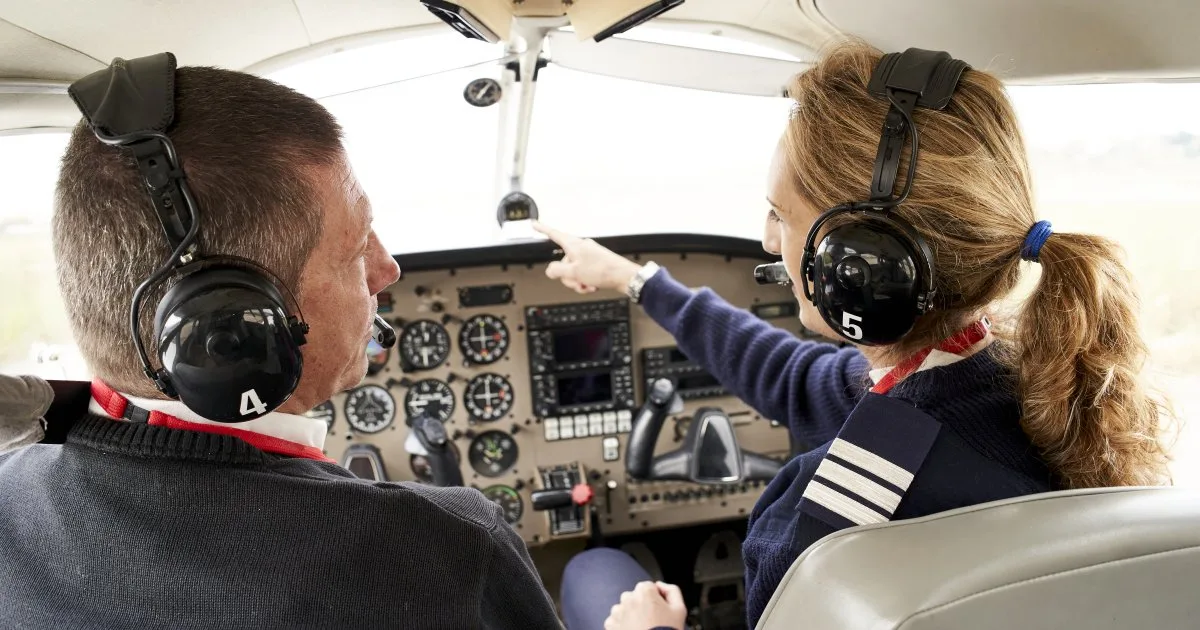
Flying your first jet: What a type rating costs, how the training works, prerequisites, and how realistic the dream is for private pilots.
Getting Into Jet Flying — Type Rating, Costs, and Reality
Flying jets is the ultimate goal for many pilots. But the path from propeller aircraft to the cockpit of a jet is long, expensive, and technically demanding. In this article, we examine what a type rating is, what prerequisites apply, how the training works, and what costs you can realistically expect. We also explain why single-pilot jets like the Cirrus Vision SF50 are democratizing access to jet flying.
What Is a Type Rating?
A type rating is a specific authorization to operate a particular aircraft type. It is endorsed on the pilot's license and is required under EASA Part-FCL (Flight Crew Licensing) — and similarly under FAA regulations (14 CFR Part 61) — for all aircraft that:
- are certified as multi-engine turbine-powered aircraft, or
- have a maximum takeoff weight (MTOW) exceeding 5,700 kg (12,500 lbs), or
- are certified for multi-crew operations
In practice, this means: virtually every jet aircraft requires its own type rating. While a pilot with a PPL and a single-engine piston (SEP) class rating may fly any Cessna 172, Piper Cherokee, or Cirrus SR22, each individual jet type requires a separate rating.
EASA defines type ratings in its Type Rating List, while the FAA maintains its own type designation system. Closely related variants can be grouped under a single type rating — for example, the Citation CJ1, CJ2, and CJ3 under the type rating "CE-525," or the Boeing 737-600/700/800/900 under "B737."
Prerequisites for a Jet Type Rating
The prerequisites depend on whether the aircraft is certified for single-pilot (SP) or multi-crew (MC) operations:
For Single-Pilot Jets (SP Operations)
- PPL(A) or CPL(A) as a base license (EASA), or Private/Commercial Certificate (FAA)
- Instrument Rating IR(A) — without an IR, a type rating is theoretically possible but practically pointless, as jets are operated almost exclusively under Instrument Flight Rules (IFR)
- Multi-Engine Rating (MEP) for twin-engine jets
- Night Rating
- Flight experience: Depending on the ATO (Approved Training Organisation) and insurer, a minimum of 200 to 500 total hours is typically recommended
- Medical certificate Class 1 or 2 (EASA) / FAA First or Second Class Medical (depending on type of operation)
For Multi-Crew Jets (MPA Operations)
- CPL(A) or ATPL(A) — a CPL is mandatory for commercial operations
- Instrument Rating IR(A)
- MCC Course (Multi-Crew Cooperation) — must be completed before or concurrently with the type rating
- ATPL Theory (frozen ATPL) for service as a First Officer at airlines
- Flight experience: Dependent on aircraft type and operator, typically 250+ hours
The MCC Course: Foundation for Multi-Crew Operations
The MCC course (Multi-Crew Cooperation) is mandatory training for all pilots who will serve in multi-crew aircraft. The course covers the unique requirements of two-pilot cockpit teamwork:
- Crew Resource Management (CRM): Effective communication, decision-making, task allocation
- Standard Operating Procedures (SOPs): Standardized procedures for all flight phases
- Threat and Error Management (TEM): Systematic identification and mitigation of hazards
- Task Sharing: Pilot Flying (PF) and Pilot Monitoring (PM) concept
The MCC course typically comprises 25 hours of theory and 20 hours of simulator training. Costs range from $3,300 to $5,500. Many ATOs offer the MCC as an integrated package with the type rating (known as "MCC/JOC + Type Rating").
Structure of a Type Rating Course
A type rating course is divided into three phases:
Phase 1: Ground School (Theory)
The theoretical training typically lasts 3 to 4 weeks of full-time classroom instruction. It covers all aircraft systems in detail:
- Engine systems and performance data
- Avionics and Flight Management System (FMS)
- Hydraulics, pneumatics, electrical systems
- Landing gear, brakes, flight controls
- Fuel system
- Pressurization and environmental control system
- Emergency procedures and limitations
- Performance calculations (takeoff run, climb performance, landing distance)
The theory phase concludes with a written examination administered by the relevant aviation authority (e.g., EASA NAA such as the UK CAA, or the FAA in the United States). The passing grade is 75 percent.
Phase 2: Simulator Training
Simulator training takes place in a Full Flight Simulator (FFS) at the highest fidelity level (Level D). These simulators replicate the aircraft so precisely that every hour logged in them counts as actual flight time. Training duration varies by aircraft type:
| Aircraft Type | Simulator Hours | Sessions |
|---|---|---|
| Citation CJ1+/CJ2+ | 20 – 24 hours | 8 – 10 sessions |
| Citation XLS/XLS+ | 24 – 30 hours | 10 – 12 sessions |
| Phenom 100/300 | 24 – 32 hours | 10 – 13 sessions |
| Challenger 300/350 | 32 – 40 hours | 13 – 16 sessions |
| Boeing 737 | 36 – 48 hours | 15 – 20 sessions |
| Airbus A320 | 36 – 48 hours | 15 – 20 sessions |
Each simulator session typically lasts 4 hours and covers specific training modules: Normal Operations, Abnormal Procedures, and Emergency Procedures. Training scenarios include:
- Engine failure after V1
- Single-engine go-around
- ILS approaches at minima (CAT I, and where applicable CAT II/III)
- Rapid decompression and emergency descent
- Hydraulic failures, electrical failures
- Wind shear and microburst recovery
- TCAS Resolution Advisories
Phase 3: Base Training (If Required)
For some multi-crew types, simulator training is followed by base training — actual flights in the real aircraft. This typically comprises 4 to 6 touch-and-go landings and serves to familiarize the pilot with the actual visual cues and handling characteristics that even the best simulator cannot fully replicate.
For single-pilot jets and many business jets, base training is often not required, as the checkride can be completed entirely in the simulator (Zero Flight Time Training, ZFTT).
The Skill Test: The Final Checkride
At the end comes the skill test — the practical examination conducted by an authority-designated Type Rating Examiner (TRE). Under FAA rules, this role is filled by a Designated Pilot Examiner (DPE). The skill test lasts approximately 3 to 4 hours in the simulator and encompasses a complete flight mission with normal operations and various emergencies. The examiner evaluates not only piloting skills but also systems knowledge, procedural competence, and — for multi-crew — cockpit teamwork.
Type Rating Costs: A Realistic Overview
| Type Rating | Cost (approx.) | Duration | Notes |
|---|---|---|---|
| Cirrus Vision SF50 | $13,000 – $20,000 | 3 – 4 weeks | Single-Pilot |
| Citation CJ2+/CJ3+ | $16,500 – $24,000 | 4 – 5 weeks | Single-Pilot capable |
| Embraer Phenom 100 | $20,000 – $27,500 | 4 – 5 weeks | Single-Pilot capable |
| Citation XLS+ | $24,000 – $33,000 | 5 – 6 weeks | Multi-Crew or SP |
| Challenger 350 | $31,000 – $42,000 | 5 – 7 weeks | Multi-Crew |
| Boeing 737 | $33,000 – $50,000 | 6 – 8 weeks | Multi-Crew, incl. Base Training |
| Airbus A320 | $33,000 – $50,000 | 6 – 8 weeks | Multi-Crew, ZFTT possible |
Additional costs include:
- Travel and accommodation: Simulator centers are located at major training hubs — FlightSafety International and CAE facilities in the U.S., Lufthansa Aviation Training in Munich, and others in Amsterdam, London, or Dubai. Budget $2,200 to $4,400 for accommodation and travel.
- Examination fees: $550 to $1,650 for authority fees (EASA NAA or FAA).
- Study materials: $220 to $550 for CBT (Computer Based Training) access and documentation.
Single-Pilot Jets: The Private Pilot's Dream
For many private pilots, single-pilot jets represent the most realistic entry into jet flying. These aircraft are certified for single-pilot operation and do not require MCC. The most notable models:
Cirrus Vision SF50
The SF50 is the most accessible entry into the jet world. With its Williams FJ33-5A engine, a service ceiling of FL280, and a cruise speed of 300 KTAS, it offers solid jet performance. Its distinguishing feature is CAPS (Cirrus Airframe Parachute System) — a whole-aircraft recovery system that provides an additional safety net even at the jet level. Many PPL holders view the SF50 as the logical next step after the Cirrus SR22, since the avionics philosophy (Garmin Perspective Touch) is similar.
Cessna Citation CJ3+
The CJ3+ is a proven single-pilot light jet with two Williams FJ44-3A engines. It reaches FL450 and 416 KTAS with a range of 1,875 NM. The CJ series is considered especially pilot-friendly and is prized by many owner-operators. The Collins Pro Line 21 avionics suite is mature and intuitive.
Embraer Phenom 100EV
The Phenom 100EV delivers an attractive package in the entry-level jet segment with its Pratt & Whitney PW617F1-E engines, Prodigy Touch (Garmin G3000) glass cockpit, and stand-up cabin. It reaches FL410 and 390 KTAS. The Phenom 100 is often cited as the most comfortable Very Light Jet in its class.
Validity and Proficiency Checks
A type rating does not last indefinitely. Under EASA Part-FCL, the following renewal requirements apply (FAA requirements differ slightly but follow similar principles):
- Validity: A type rating for single-engine piston aircraft is valid for 2 years; for all other types, 1 year (EASA). Under FAA rules, no formal type rating expiration exists, but Proficiency Checks or recurrent training programs serve a similar purpose.
- Proficiency Check (PC): Annual check flights in the simulator or aircraft conducted by a Type Rating Examiner. The PC covers Normal Operations, Abnormal Procedures, and Emergency Procedures and typically lasts 3 to 4 hours.
- Recurrent Training: Before the Proficiency Check, refresher training (typically 4 to 8 simulator hours) is completed. For commercial operators, this is mandated under EASA Part-ORO or FAA Part 135/121 operations specifications.
- Annual Recurrent Training + PC cost: $5,500 to $16,500 per year, depending on aircraft type.
If a pilot allows their type rating to lapse (more than 1 year past expiration under EASA), they must complete a revalidation training program that, depending on the duration of inactivity, may be equivalent to partial or full initial training.
Insurance Requirements: The Hidden Hurdle
Even with a valid type rating, insurers impose their own — often stricter — requirements for pilot experience. Typical minimums for hull and liability coverage on a business jet:
- 500 to 1,500 total flight hours
- 100 to 300 hours in type or comparable jets
- 50 to 100 hours of IFR experience in the last 12 months
- Completion of an approved initial and recurrent training program
Pilots who lack this experience often must fly with a mentor pilot or safety pilot for the first 50 to 200 hours in type — an additional cost of $550 to $1,650 per day plus expenses.
The Reality: What Many Underestimate
Getting into jet flying is more than just a course and a checkride. It represents a fundamental shift in pilot mindset. Jets fly faster, higher, and are more complex than piston aircraft. What many aspiring jet pilots underestimate:
- Speed: Everything happens faster. On approach at 140 knots instead of 90 knots, decisions must be made significantly earlier.
- Systems complexity: A modern business jet has hundreds of systems that must be monitored. The cockpit philosophy shifts from "fly everything manually" to "manage and monitor systems."
- High-altitude physiology: Flight above FL400 requires understanding of decompression, hypoxia, and the unique aspects of high-altitude operations.
- Ongoing costs: Beyond the aircraft operating costs, $5,500 to $16,500 annually for recurrent training — for as long as you want to keep your type rating current.
- Mental workload: IFR operations in complex airspace (e.g., KJFK New York, EGLL London Heathrow, KLAX Los Angeles) with ATC communications, FMS programming, and systems monitoring demand a high degree of multitasking and stress tolerance.
The SF50 as the Gateway Drug
The Cirrus Vision SF50 has carved out a special position in private aviation: it is the first and so far only single-engine jet designed for the private owner-operator. Many PPL holders who fly a Cirrus SR22T see the SF50 as the natural progression:
- Same avionics philosophy (Garmin Perspective Touch / G3000)
- Familiarity with Cirrus systems and CAPS
- Single-pilot, no MCC required
- Moderate performance (FL280, 300 KTAS) — not overwhelming
- Type rating comparatively affordable (approx. $13,000–$20,000 through Cirrus)
Cirrus offers the Cirrus Transition Training Program, a structured pathway that bridges the gap between the SR22 and the SF50. The program covers jet aerodynamics, high-altitude operations, and SF50-specific systems. The statistics show this approach works: the SF50's accident rate, despite the large number of less-experienced private pilots operating it, remains in line with jet fleet averages.
Conclusion
Getting into jet flying is an achievable but demanding goal. A type rating costs between $13,000 and $50,000 depending on type and requires 3 to 8 weeks. The ongoing costs for recurrent training ($5,500–$16,500 annually) and insurance requirements must not be underestimated. For private pilots, single-pilot jets like the SF50, the CJ series, or the Phenom 100 offer a realistic entry point — provided the foundational skills (instrument rating, sufficient hours, mental readiness) are in place. A type rating is not the finish line but rather the beginning of a continuous learning journey into a faster, higher, and more complex world of flying.
